Modernizing and streamlining surgery scheduling with AI
30% More Efficient for AI-Powered Surgery Scheduling Platform
Impacts
context
The fragmented and manual scheduling process led to operational inefficiencies.
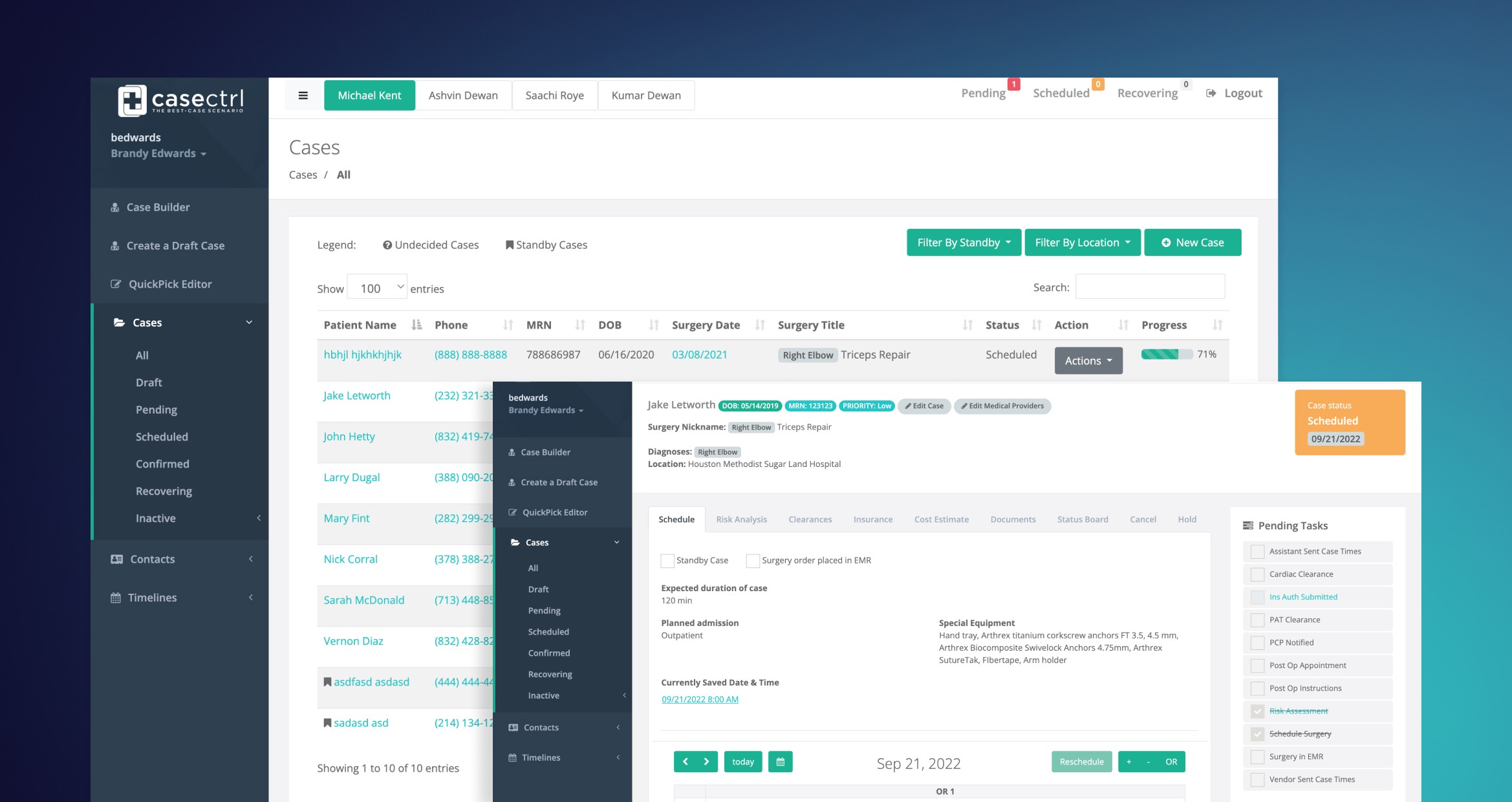
Surgery scheduling was a highly manual and fragmented process, requiring intricate coordination between surgeons, patients, caretakers, operating rooms, equipment, insurance approvals, and numerous documents. This was particularly challenging for independent surgeons juggling multiple facilities and complex patient cases, resulting in significant suboptimal resource utilization and financial losses.
1.0 | User Stories
The problem
The existing surgical scheduling process was fragmented and prone to high cognitive load and error rates, leading to substantial financial losses from missed cases, underutilized equipment, and increased administrative overhead.
insights
Optimization through AI, clear prioritization and centralized information.
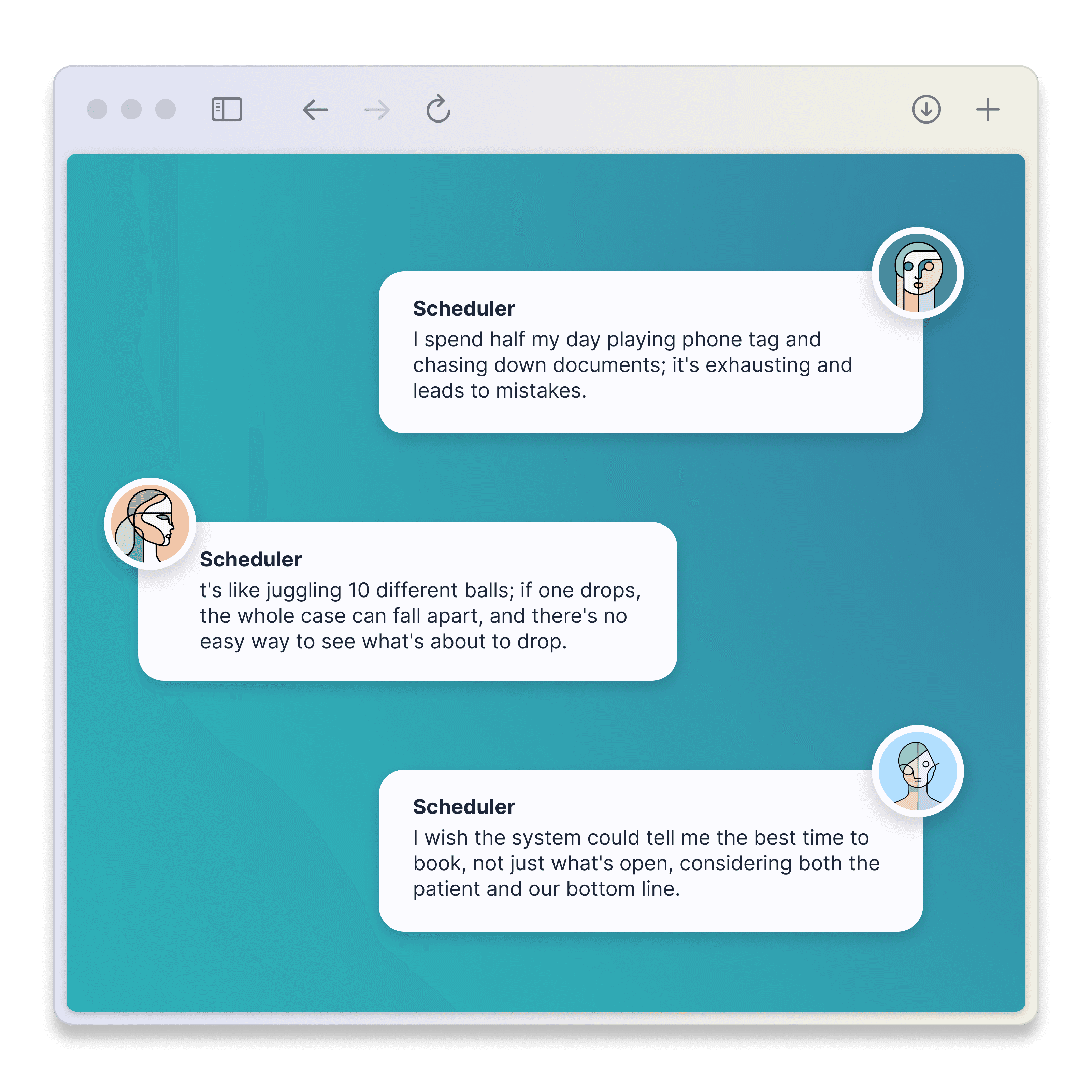
I interviewed over 30 schedulers, surgeons, and clinic administrators, alongside conducting contextual inquiries and analyzing support tickets. Key insights revealed the critical need for a system that could centralize fragmented information, reduce cognitive load, and provide intelligent decision-making support.
North Stars
Strategic design principles
Design process
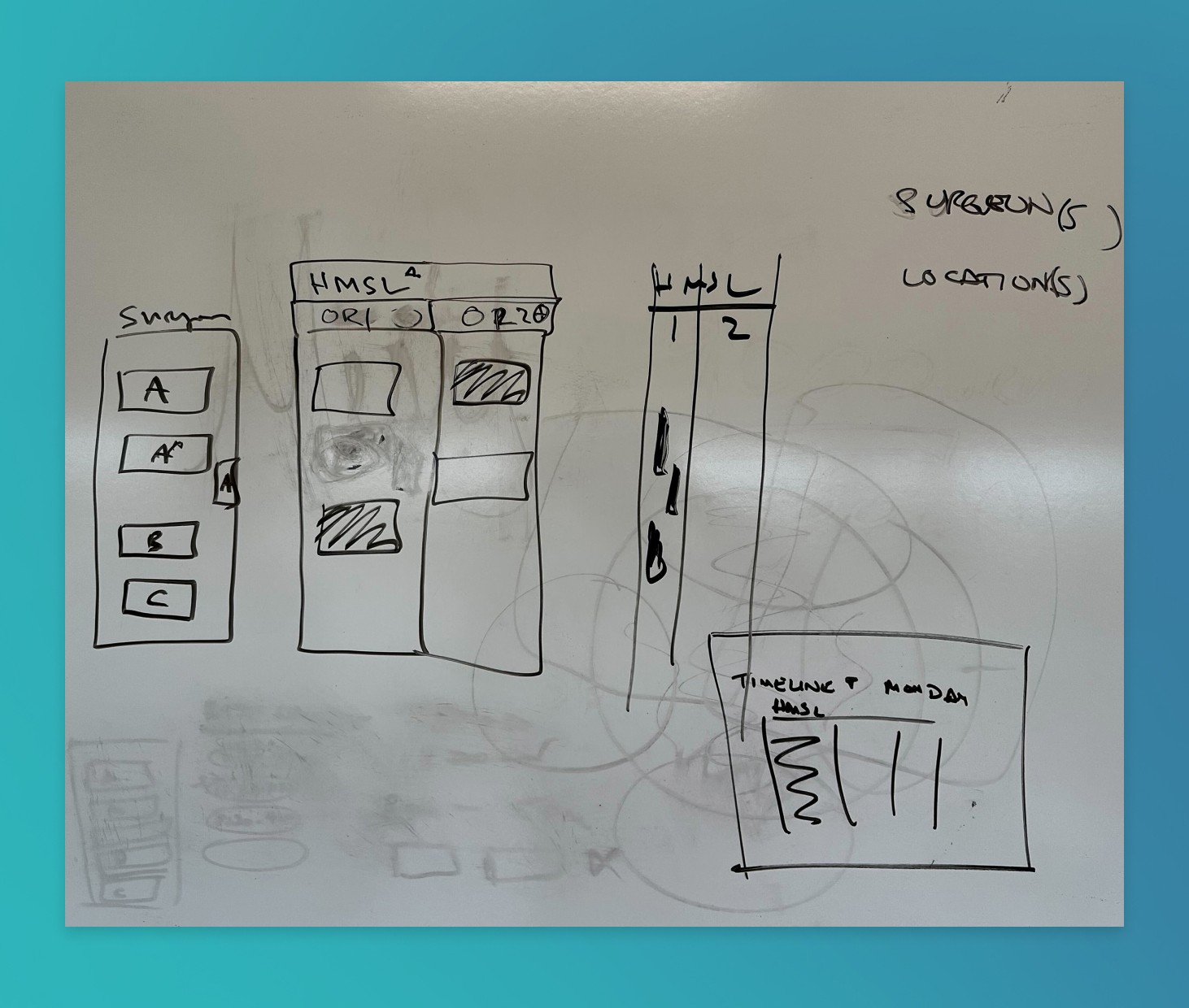
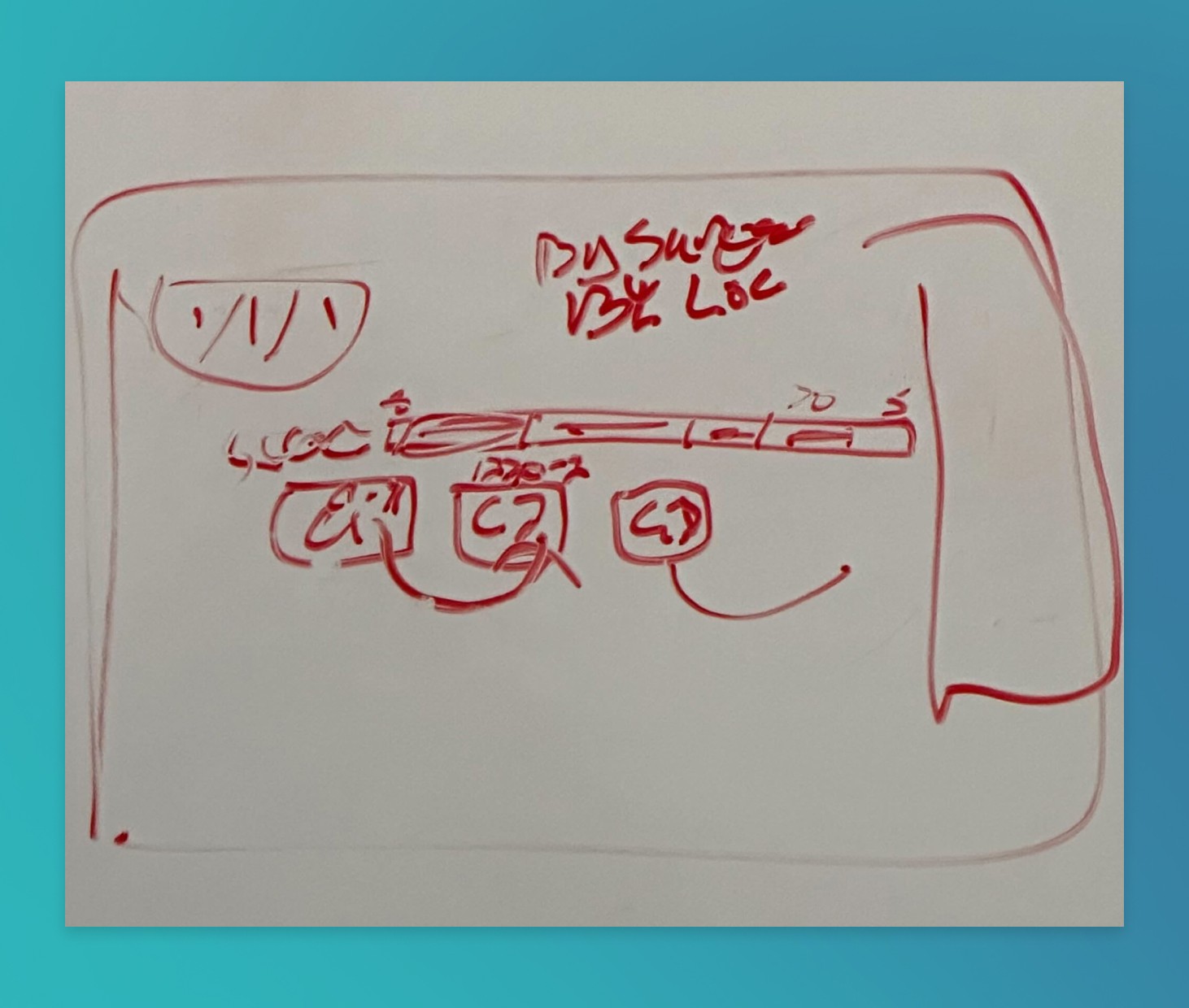
Collaboration with engineers
The solutions
Intelligent Solutions for Complex Scheduling
01.
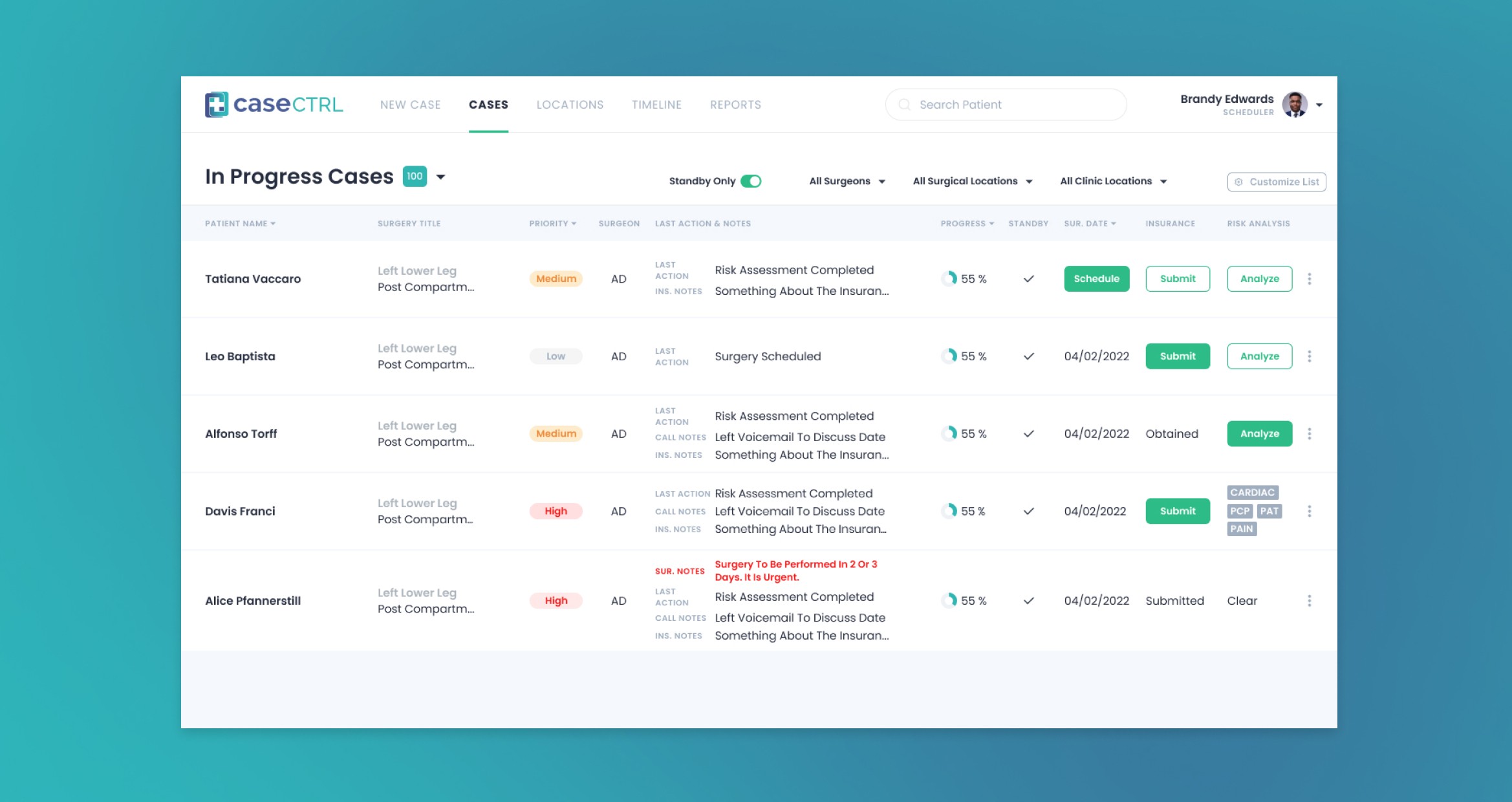
Prioritized case management dashboard
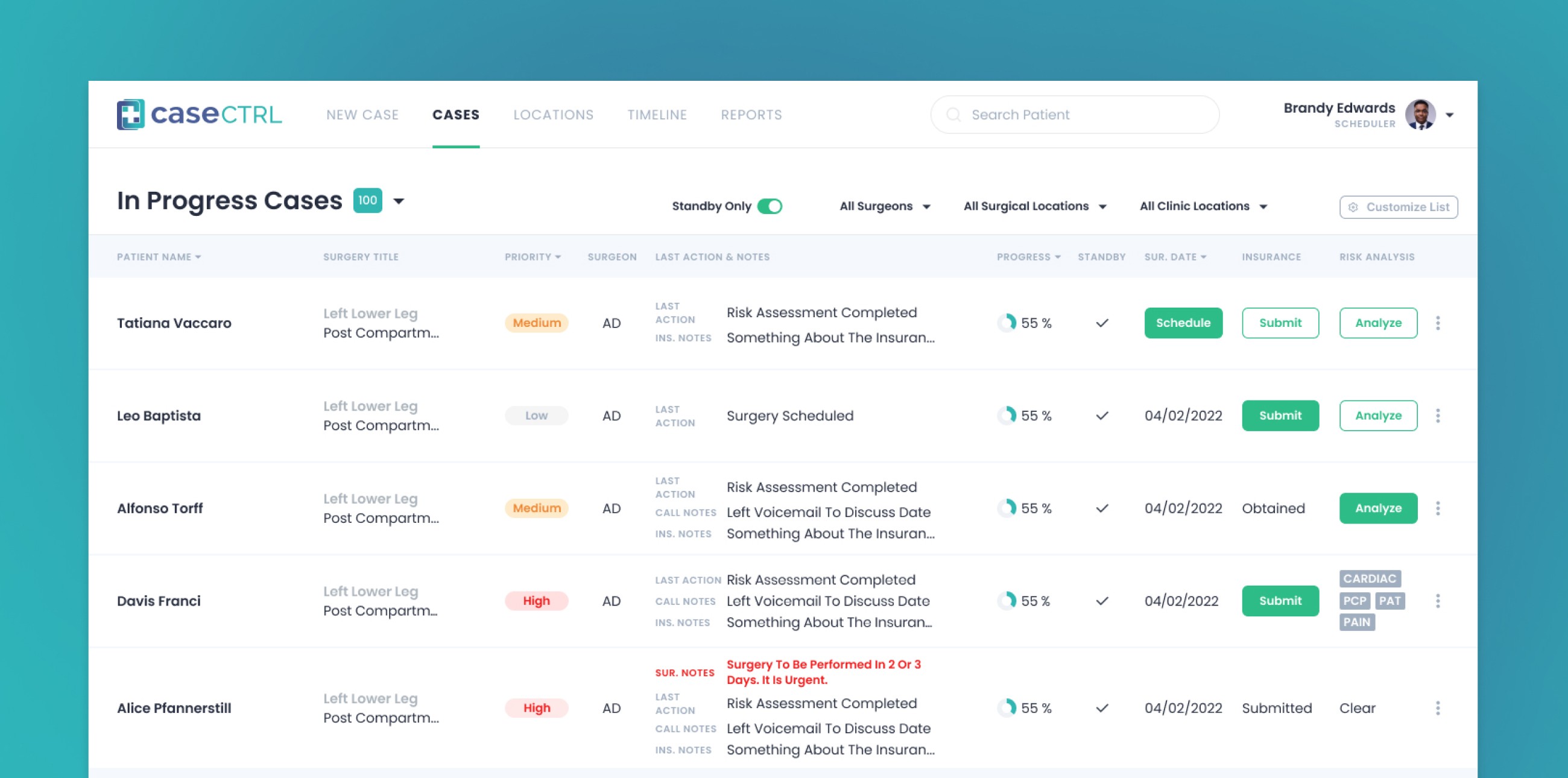
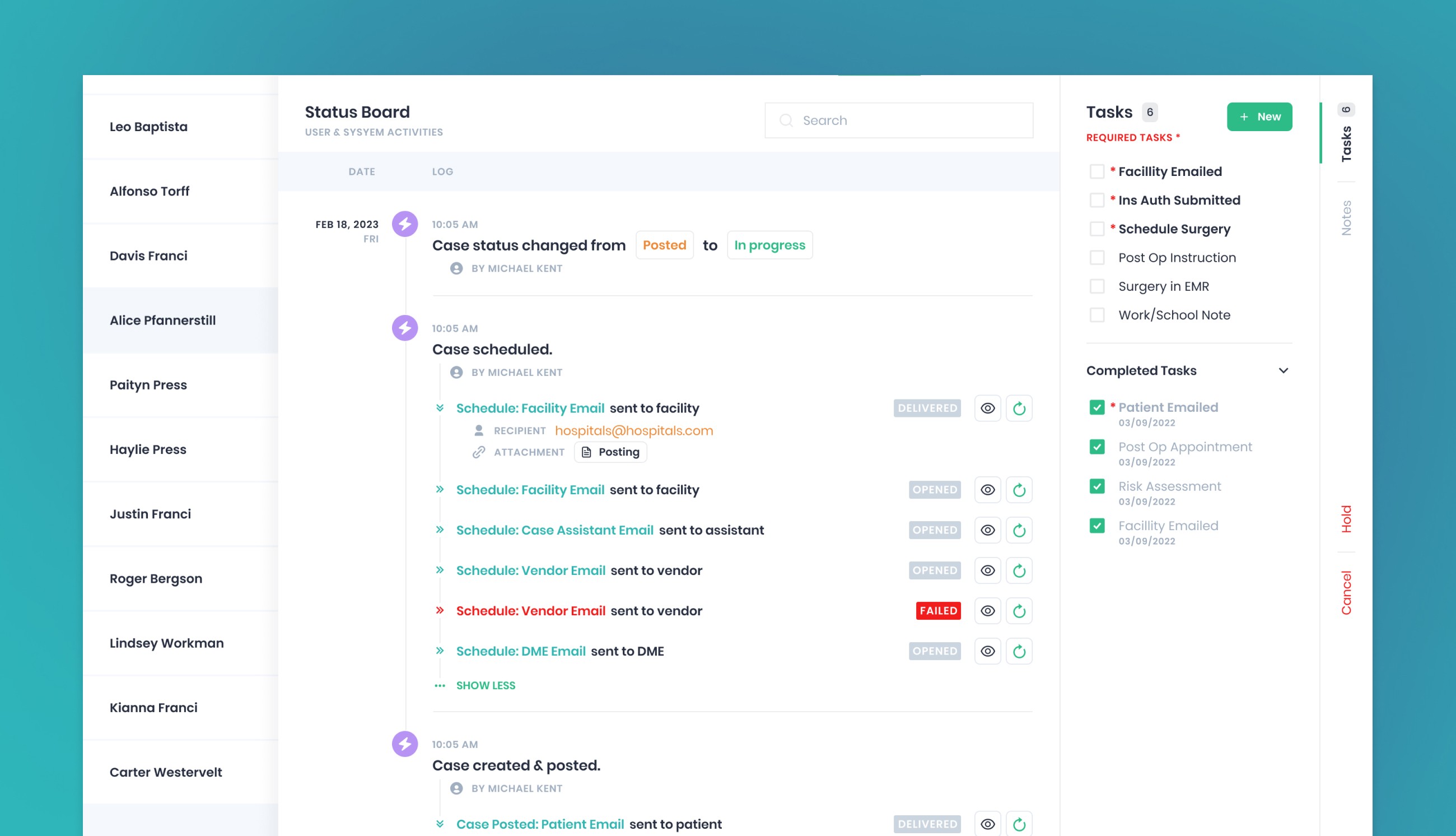
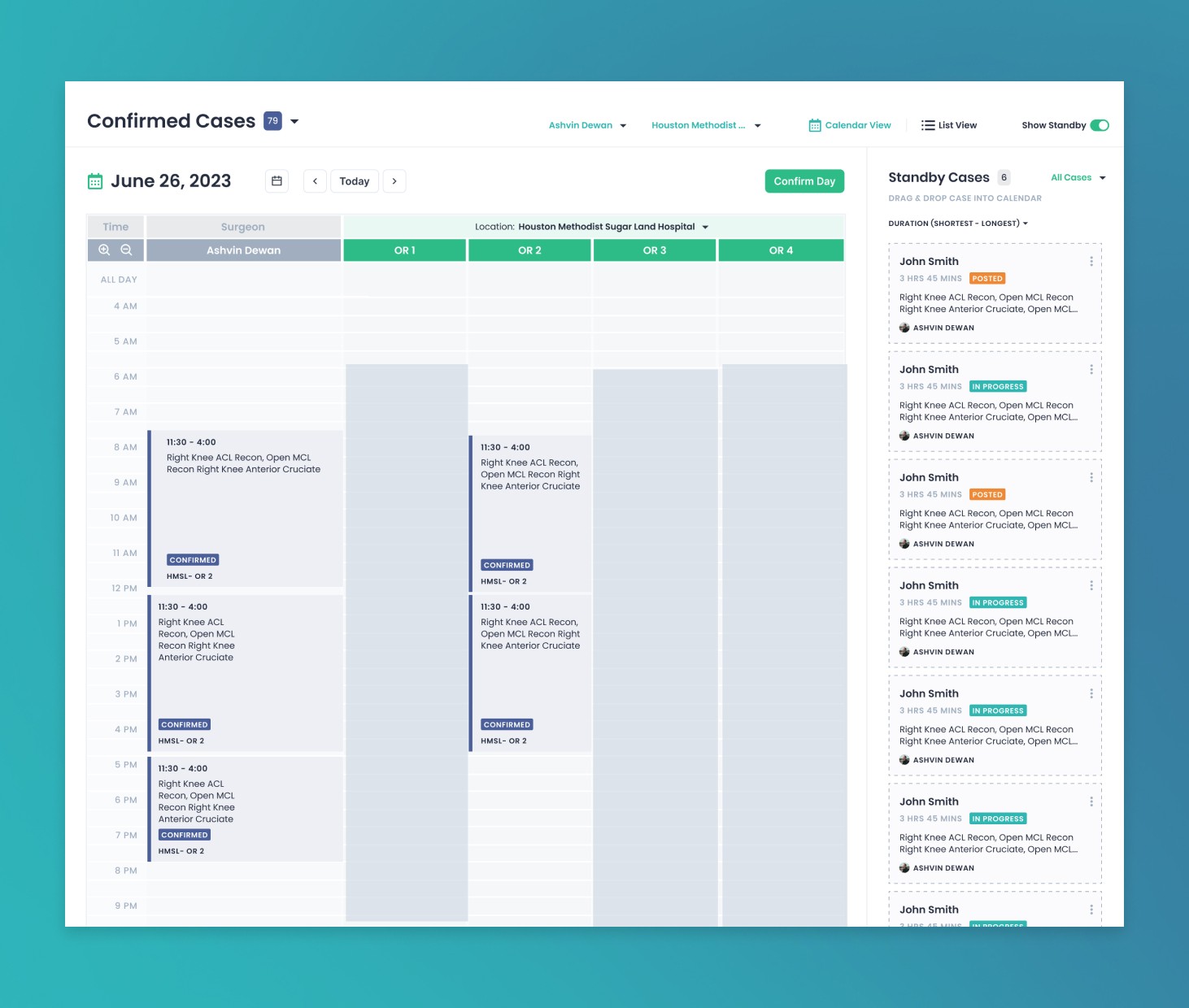
Schedulers struggled to quickly assess case status and urgency. I designed a dashboard that intuitively categorizes cases into "Posted," "In Progress," "Confirmed," and "Archived," dynamically prioritizing them by urgency.
This system provides critical information at a glance, reducing cognitive load and allowing for efficient triage.
02.
Intelligent time slot suggester (AI-powered)
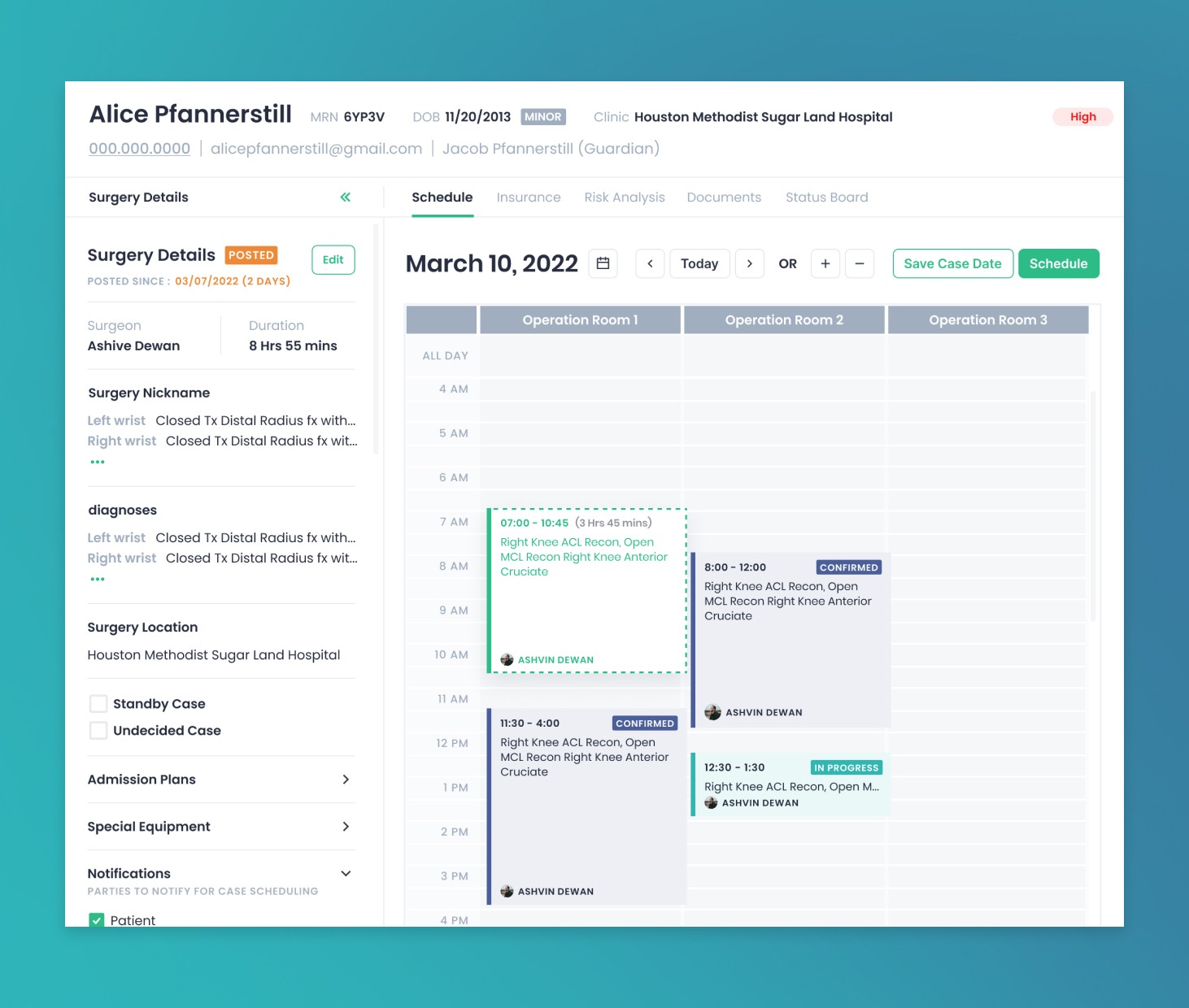
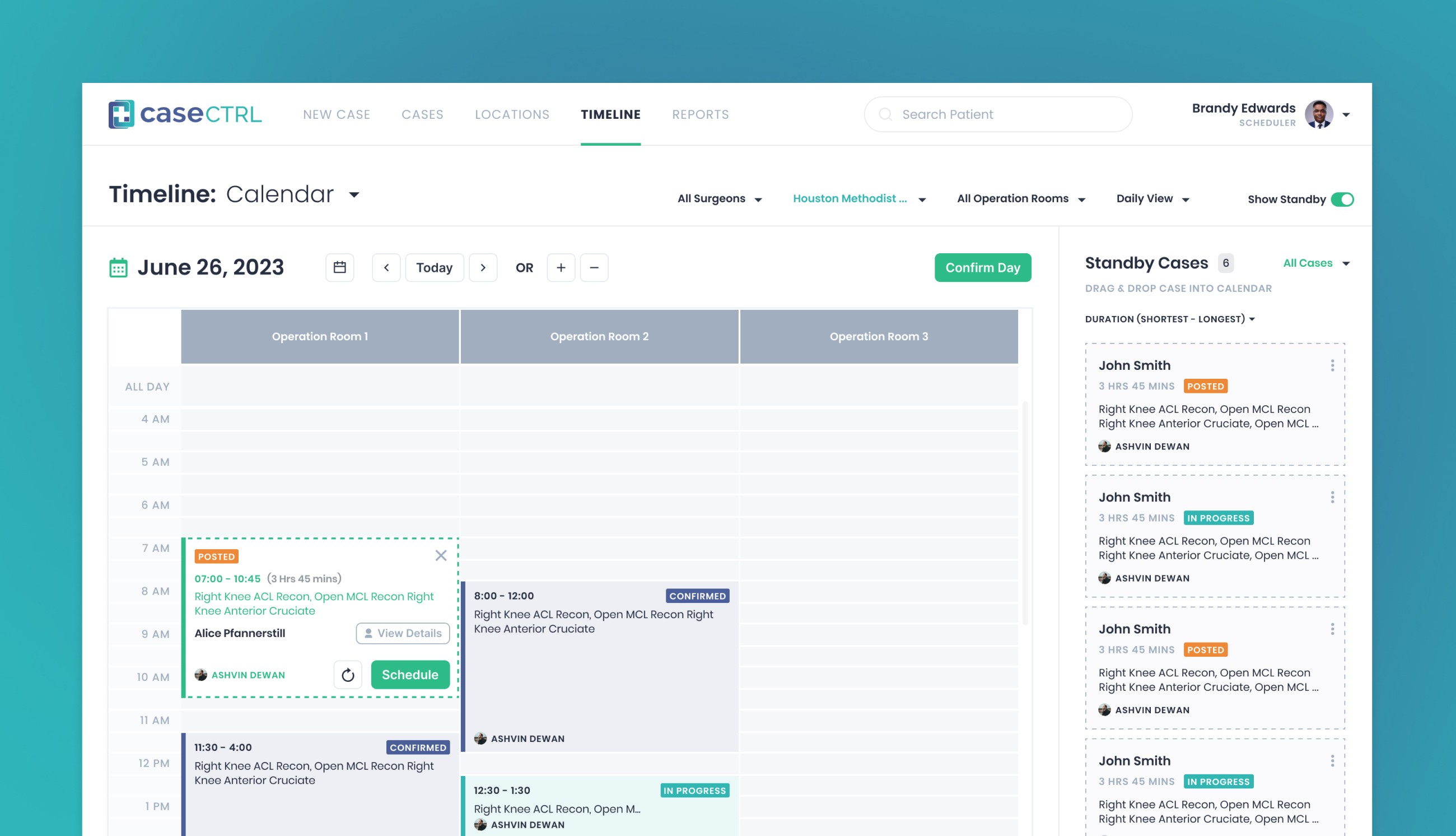
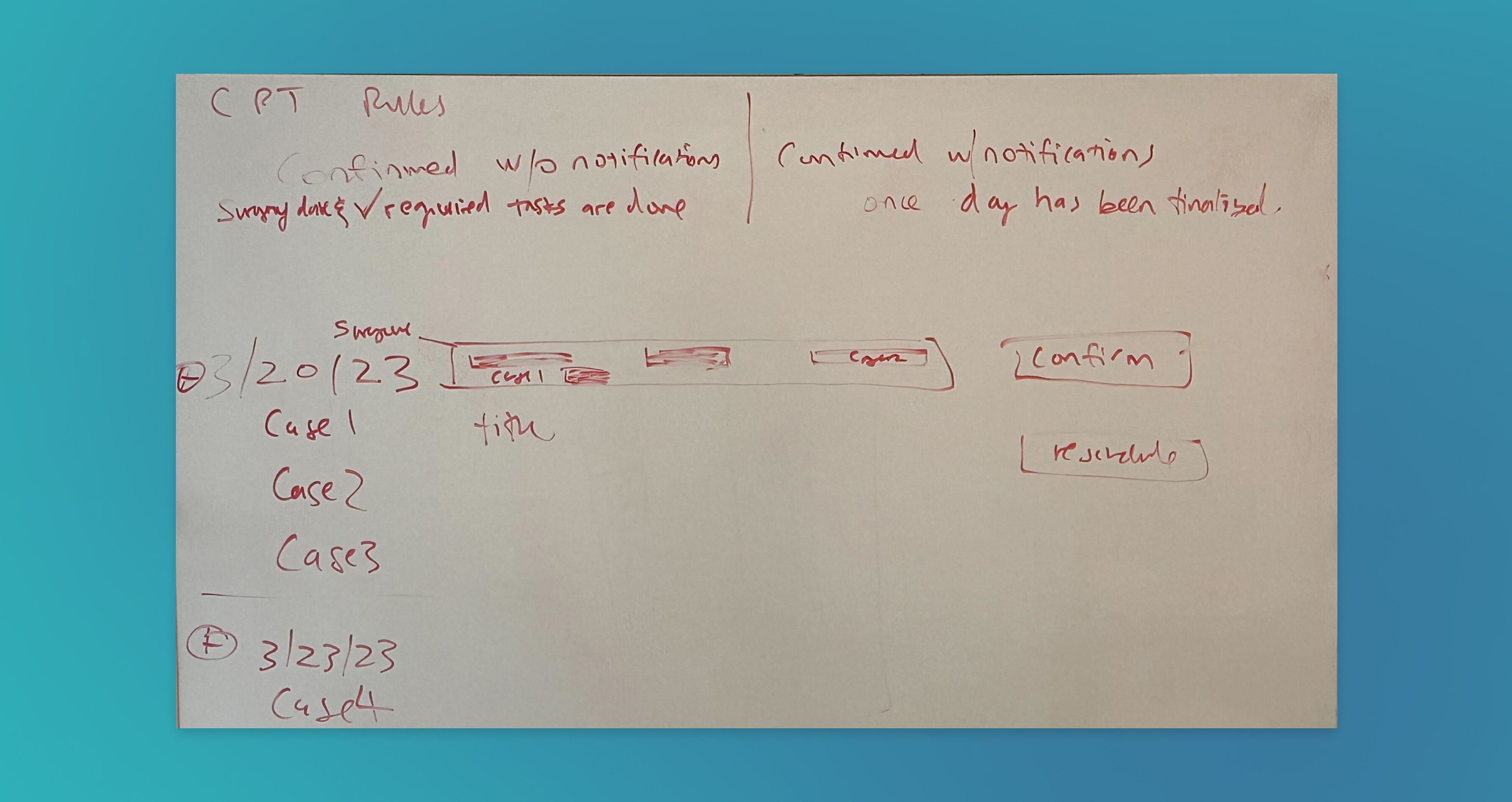
Manually finding optimal surgery slots was a logistical nightmare. The new AI-powered feature recommends the most optimal time slots by considering real-time availability of resources (surgeons, ORs, equipment), cost efficiencies, patient preferences, and predictive analysis. .
This required extensive collaboration with data scientists to translate complex algorithms into intuitive UI visualizations, with user testing focused on building trust in AI recommendations.
04.
Streamlined Workflow & Context Switching
Drawer system & tabs
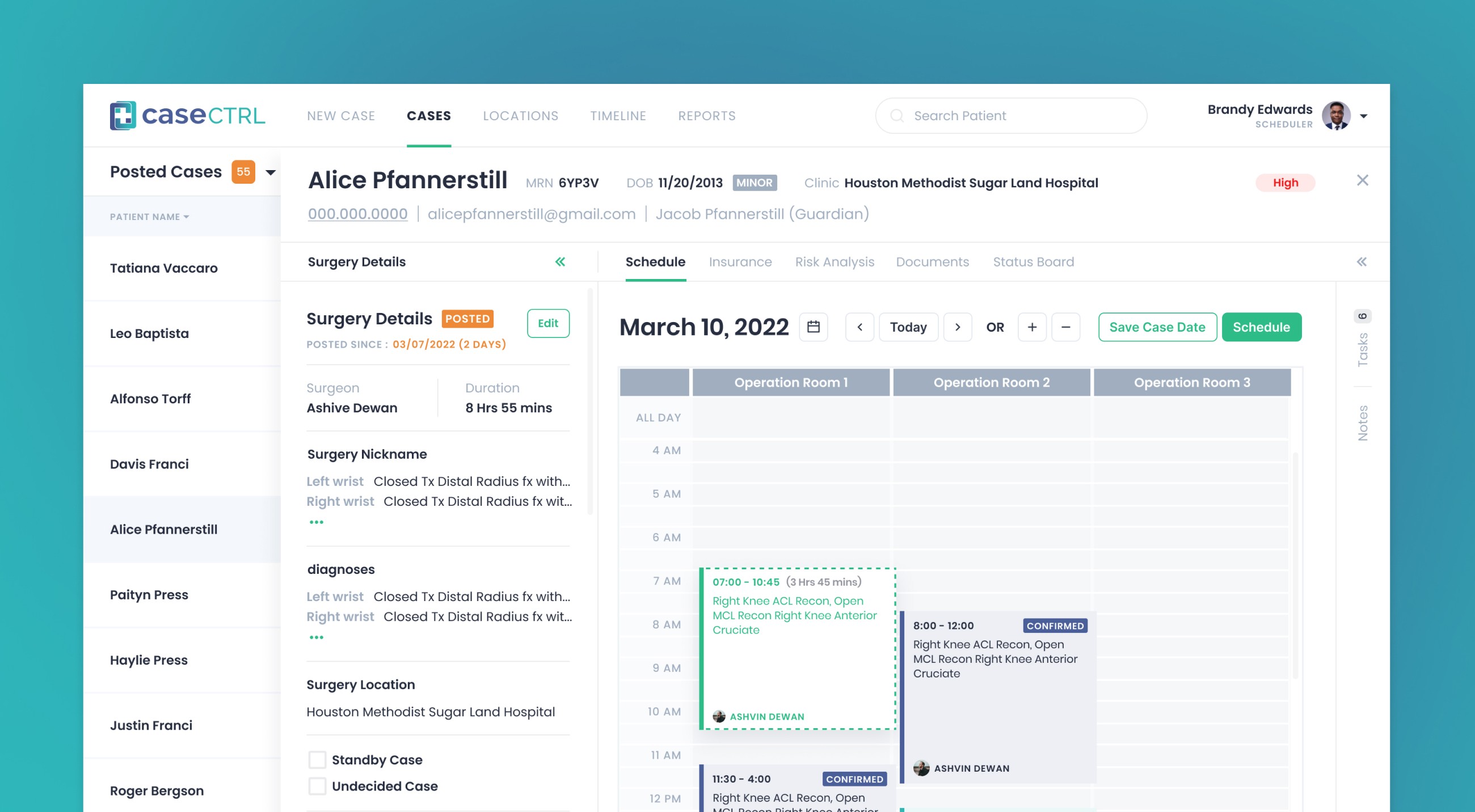
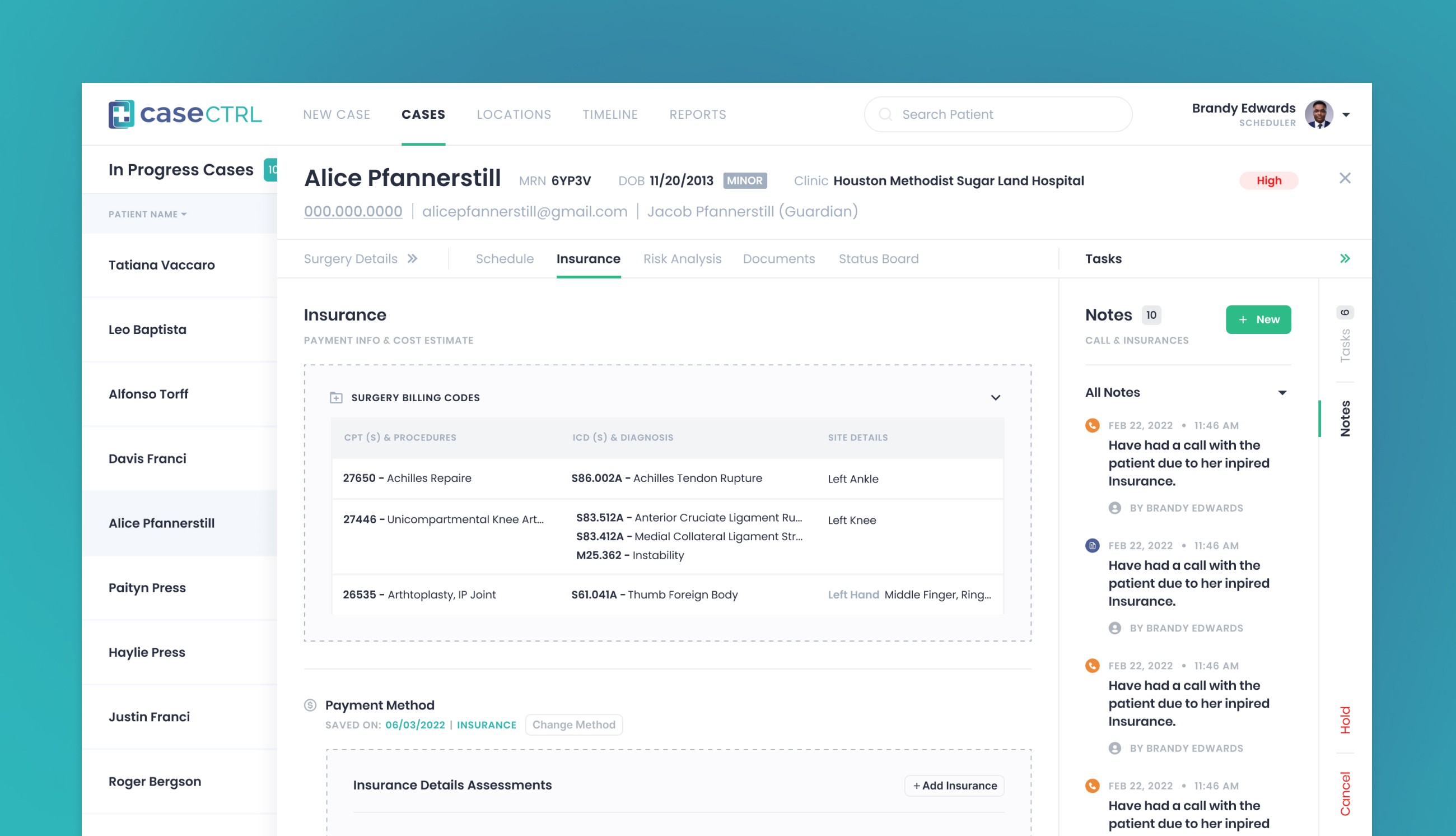
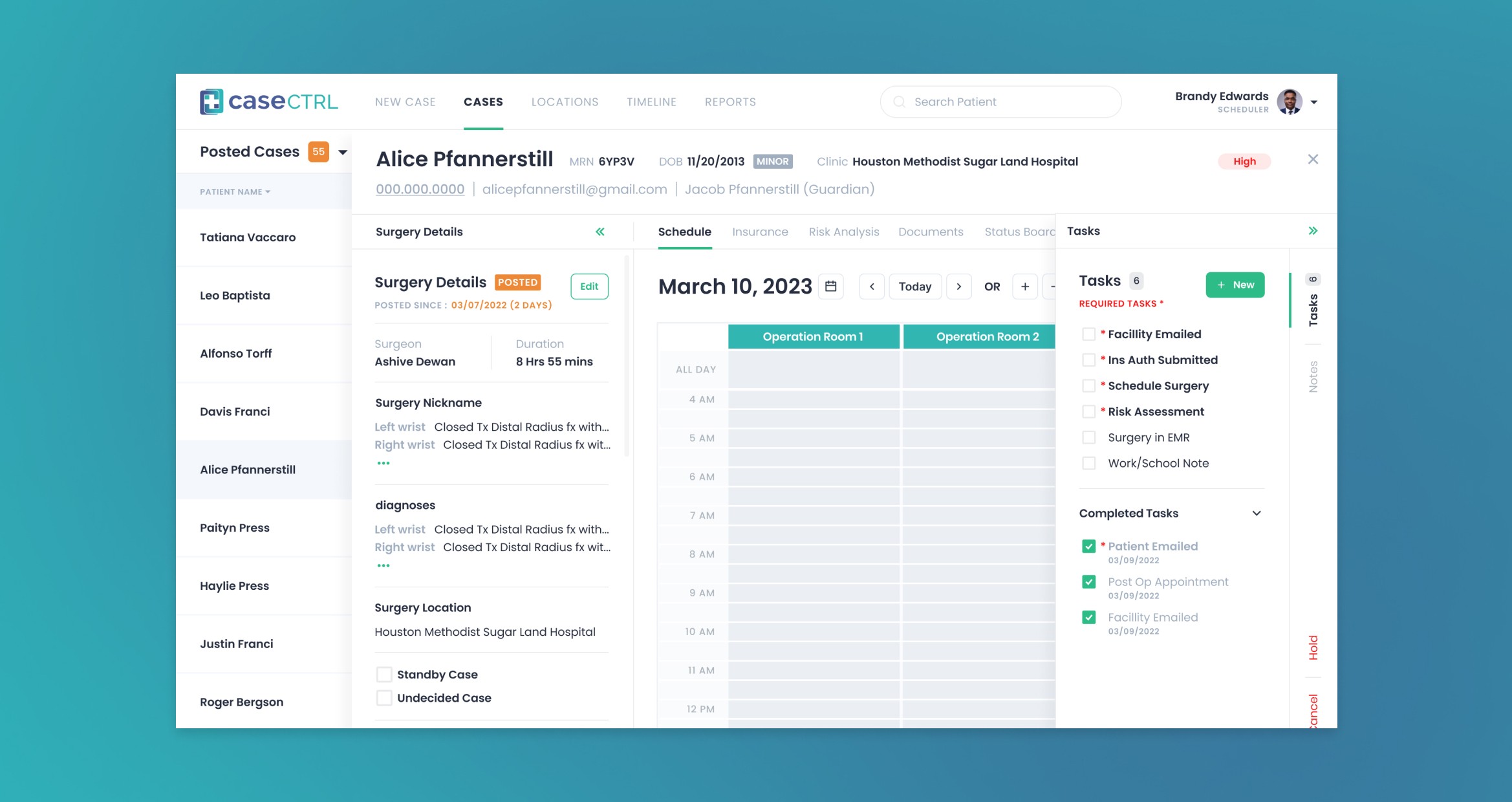
Schedulers constantly switched between cases, disrupting their flow. I implemented an innovative Drawer System that slides in from the right, allowing quick access to detailed patient information without leaving the main case list. Complementary tabs and collapsible menus within the drawer further organize information and streamline specific workflows, minimizing context switching.
Retrospective
Through deep domain empathy, continuous iteration with real users, and strong cross-functional collaboration, CaseCTRL achieved significant positive impacts.