CaseCTRL
The Spatial Grammar That Holds the Scheduler's Context
The system holds the context. One principle, four surfaces.
Spatial Grammar
Clinical UX
AI Trust
Information Architecture
Diagnostic Reframe
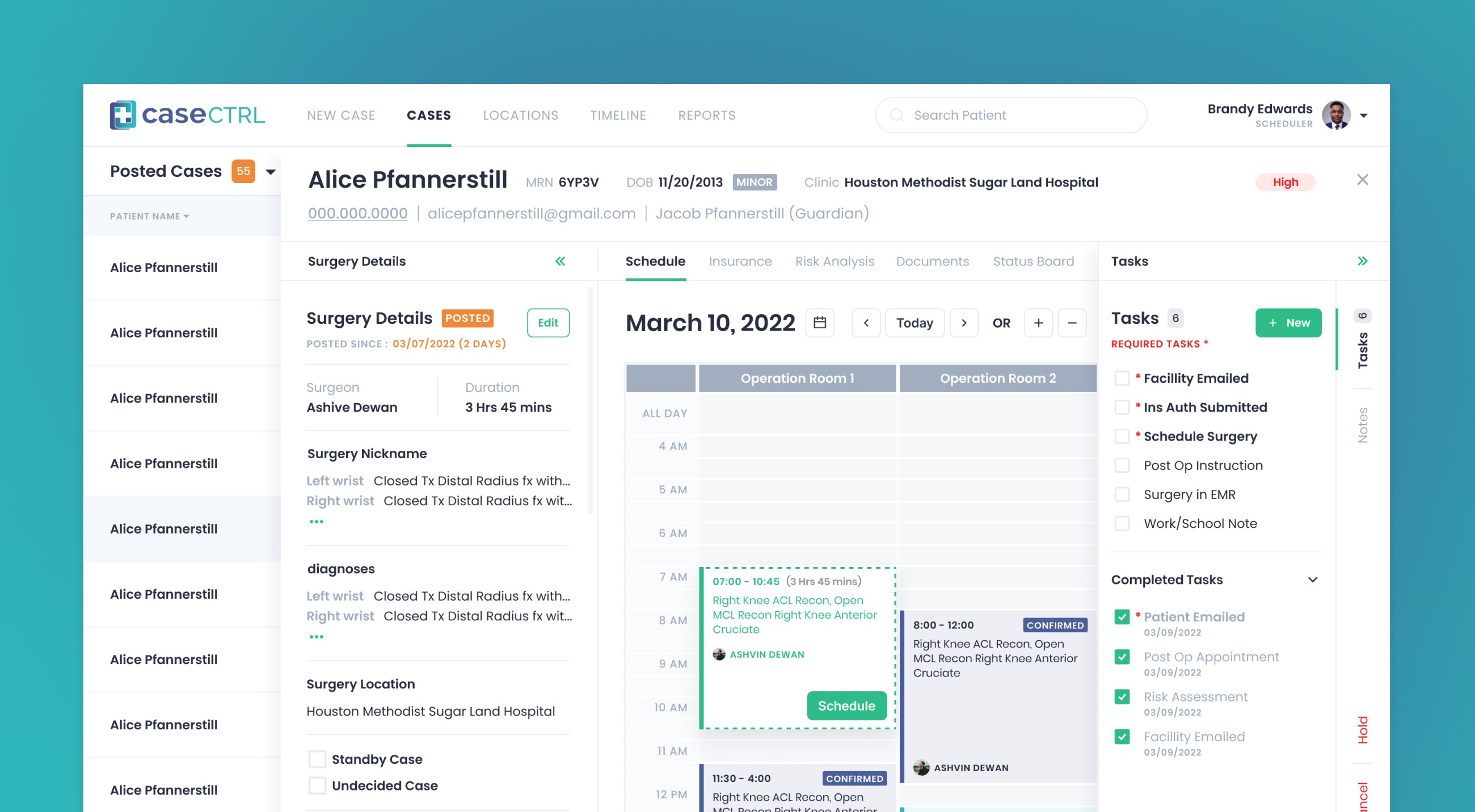
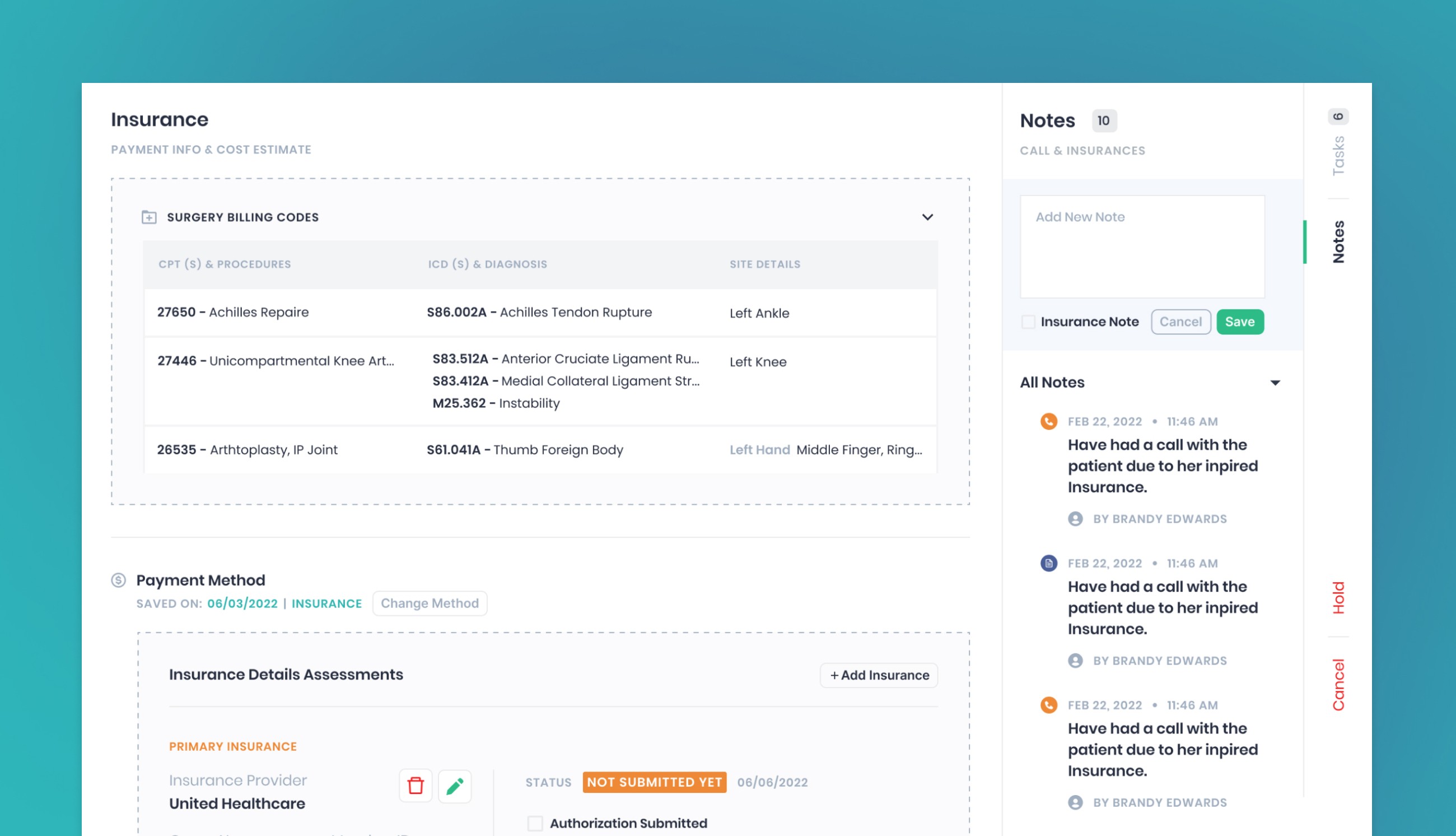
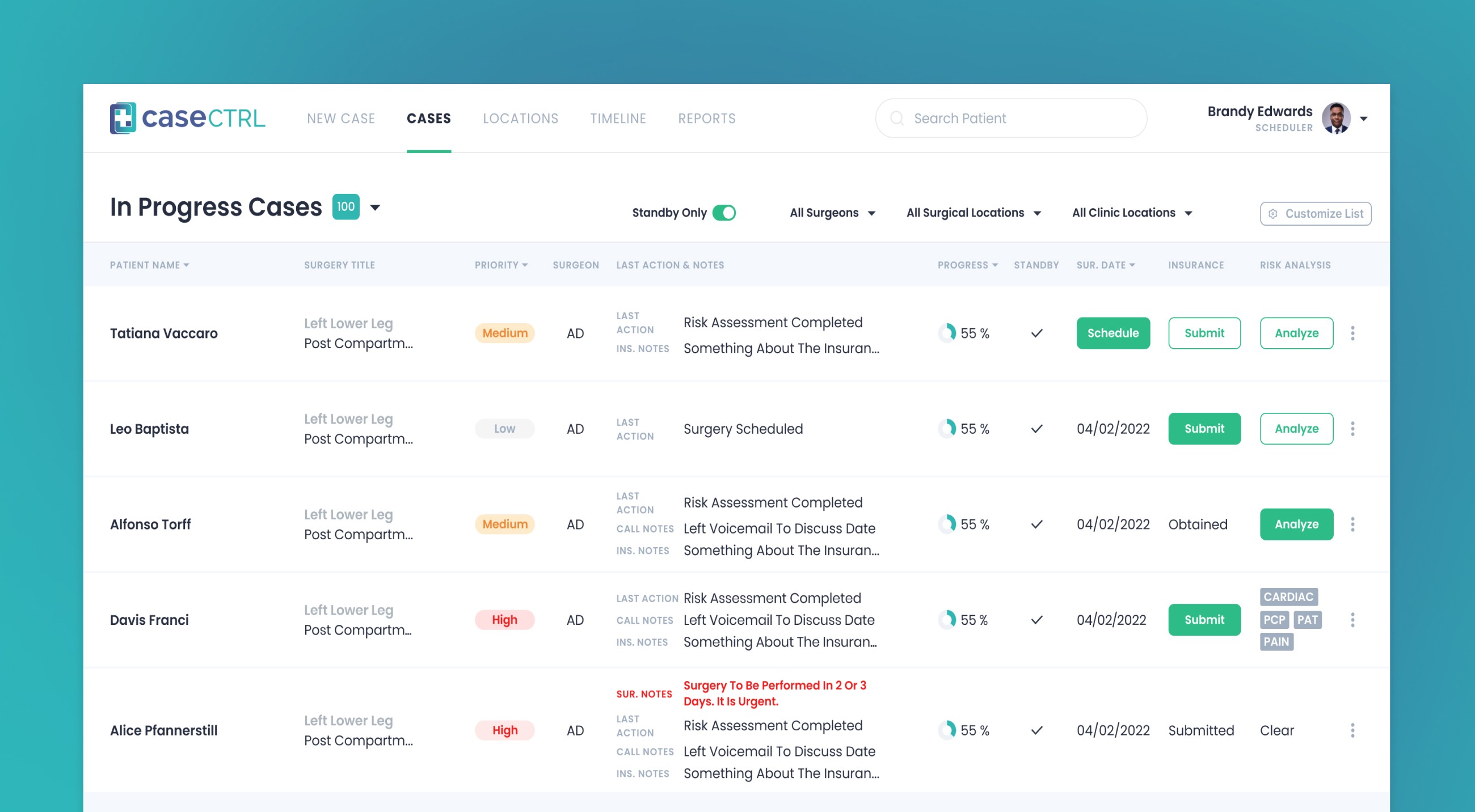
I rebuilt the surgical scheduling platform for CaseCTRL's independent clinics around a single spatial grammar for cognitively loaded work. Three-panel layout, four context-holding surfaces, AI suggester with a visual trust contract. Schedulers don't work in single-case focus, they juggle multi-party coordination under constant interruption, and the platform holds that load so they don't have to.
The form flattened the real work
The MVP was a low-adoption product built as a linear form, leaving CaseCTRL's clinics losing cases against fixed-rate OR time. The diagnostic was a reverse-engineering exercise, starting from the scheduler's end state and working backward through tasks, actions, information, and extreme cases. The exercise surfaced what the form had flattened. The scheduler's actual cognitive load was the real design surface, multi-party coordination, interruption-heavy days, and the constant reach for information held outside the active case.
One read, from layout to AI
The same read shaped everything from spatial layout to AI output. Four surfaces hold context that the scheduler would otherwise have to reconstruct.
→
The drawer slides patient detail in from the right without leaving the list
→
The Surgery Details panel sits permanently on the left as the surgeon-scheduler handoff contract
→
The Notes sidebar sits fixed on the right for interruption-heavy capture, and the
→
The Action column lives in the list view so triage happens before the drawer ever opens.
AI output follows the same principle visually. Dotted-line treatment marks recommendations, solid-line marks confirmed actions, and the scheduler confirms by clicking inside the dotted block. The same spatial grammar was later carried into CaseBuilder, CaseCTRL's surgeon-facing case creation tool.
The non-standard pattern won on logic
CaseCTRL was acquired by a major hospital scheduling platform within two years of the redesign. When engineering pushed back on the drawer as a non-standard SaaS pattern, the resolution was prototype plus reasoning. The directional logic of the interaction made the case, and the working session that produced the spec brought engineering in as partners.
→
Deterministic Spatial Grammar
→
Non-Linear Systems Architecture
→
Human-in-the-Loop AI Trust Models
→
Multi-Persona Handoff Architecture
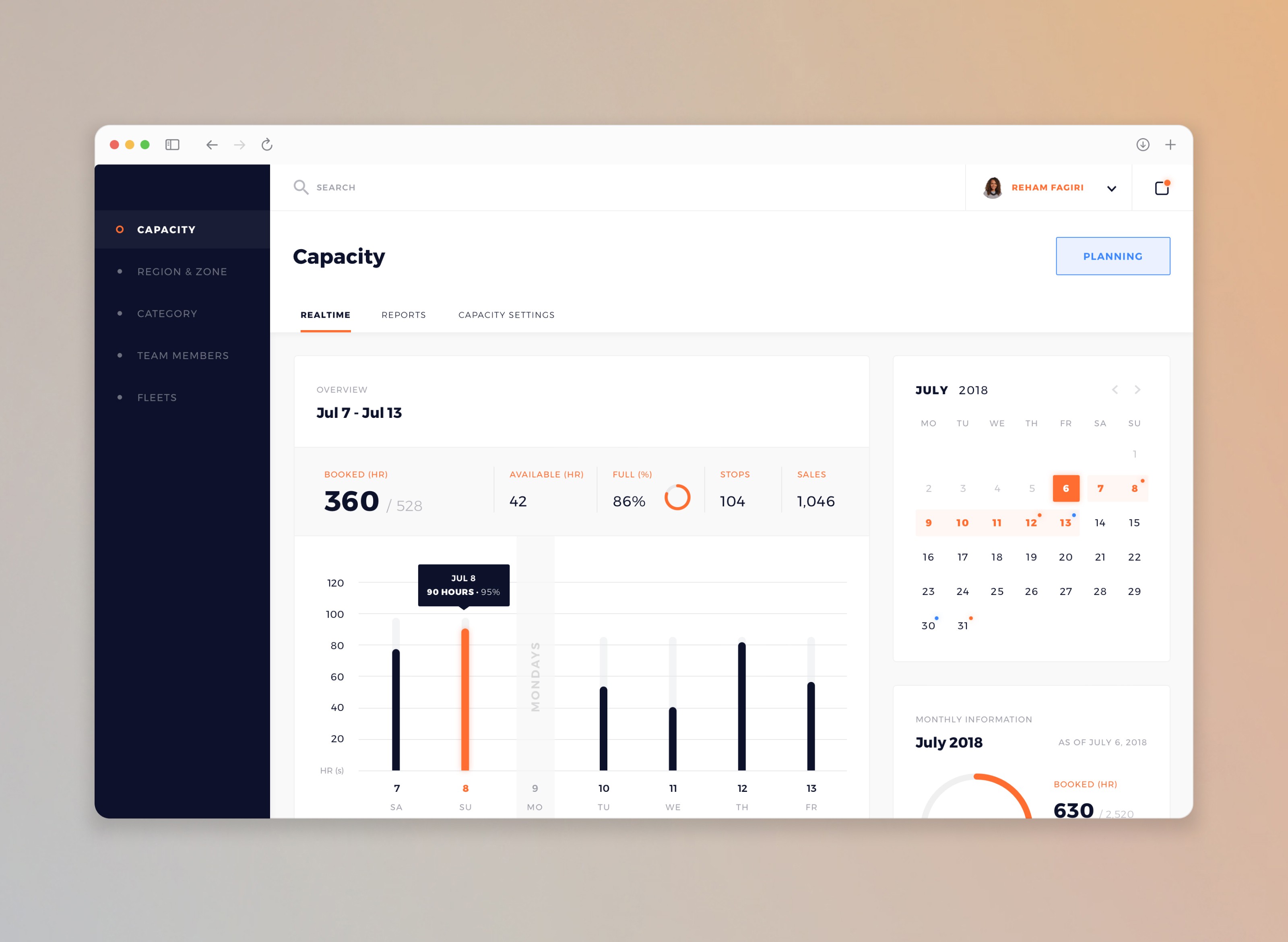
Built the Operator Layer Beneath the Marketplace
AptDeco
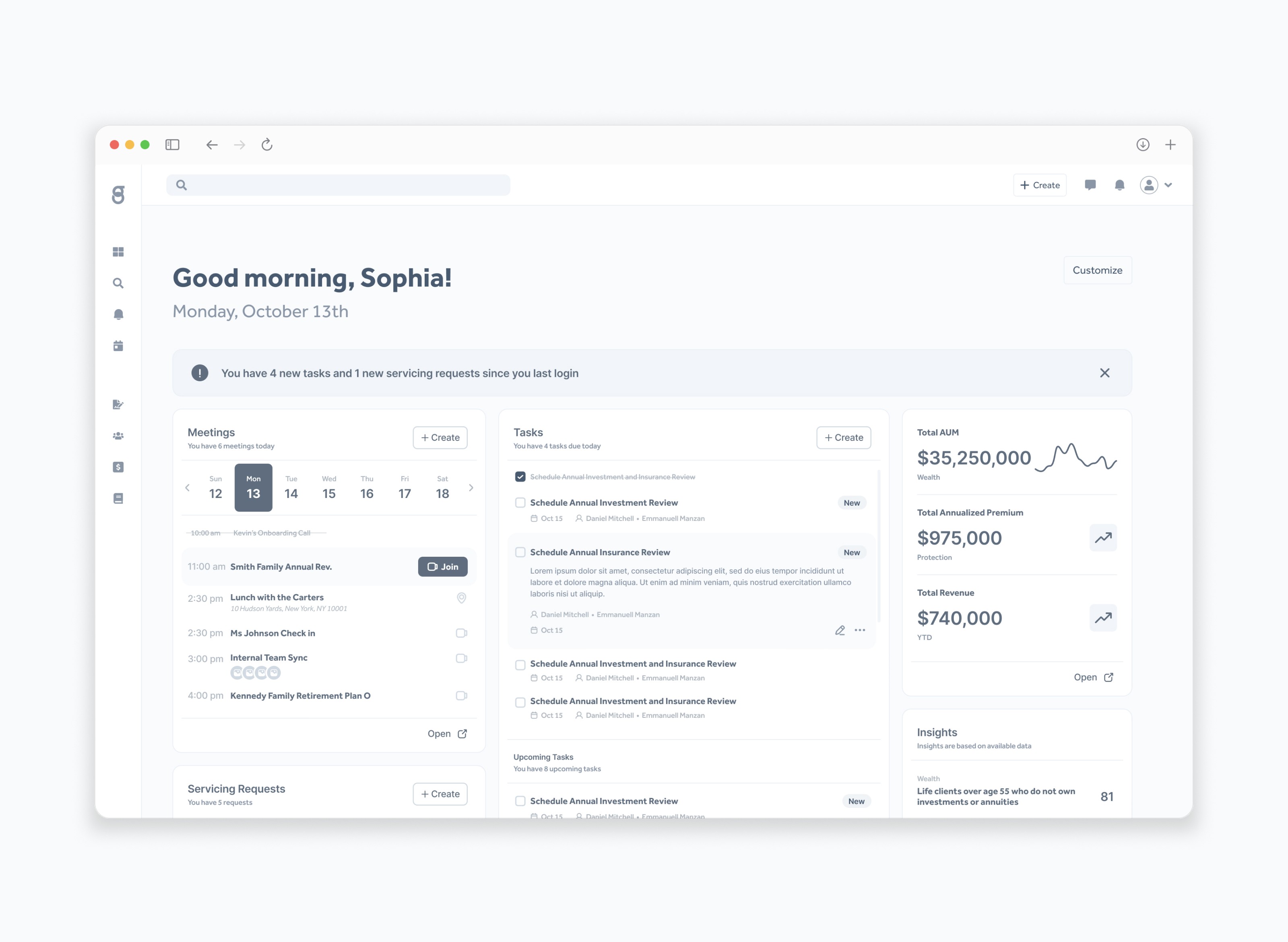
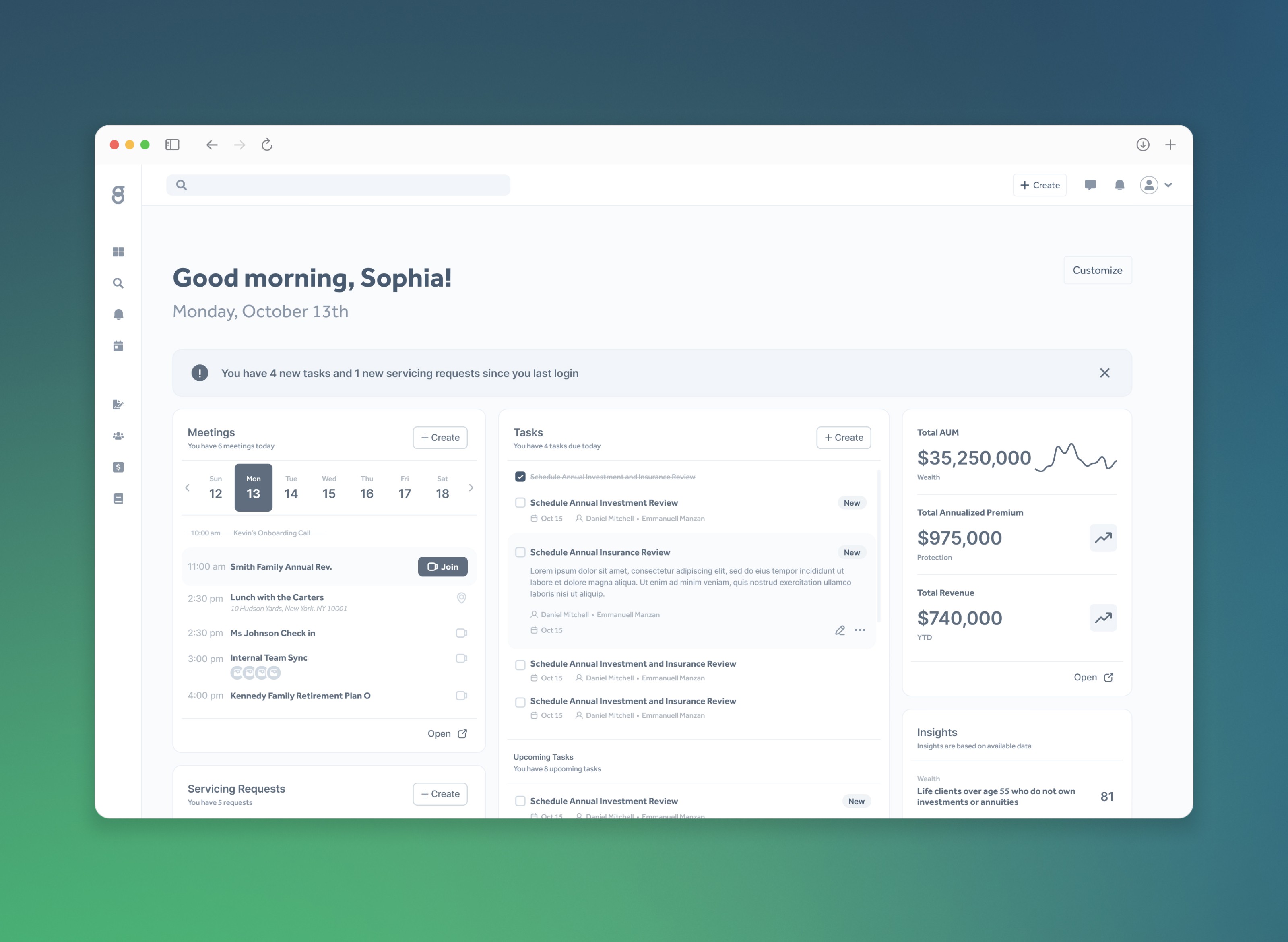
The Operator Contract for Probabilistic AI at Enterprise Scale
Guardian Life Insurance