Full Case Study Coming Soon
Guardian Life Insurance
The Operator Contract for Probabilistic AI at Enterprise Scale
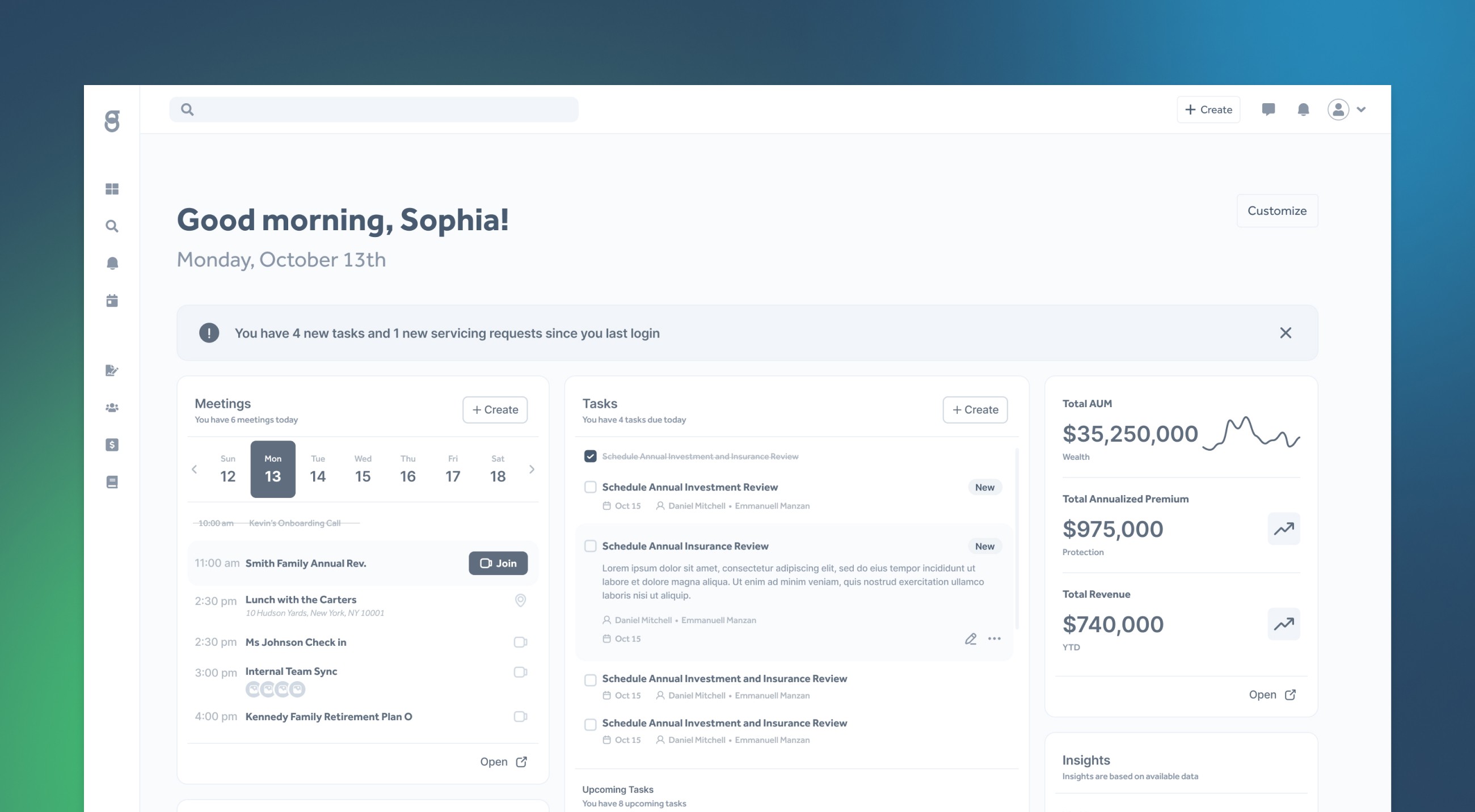
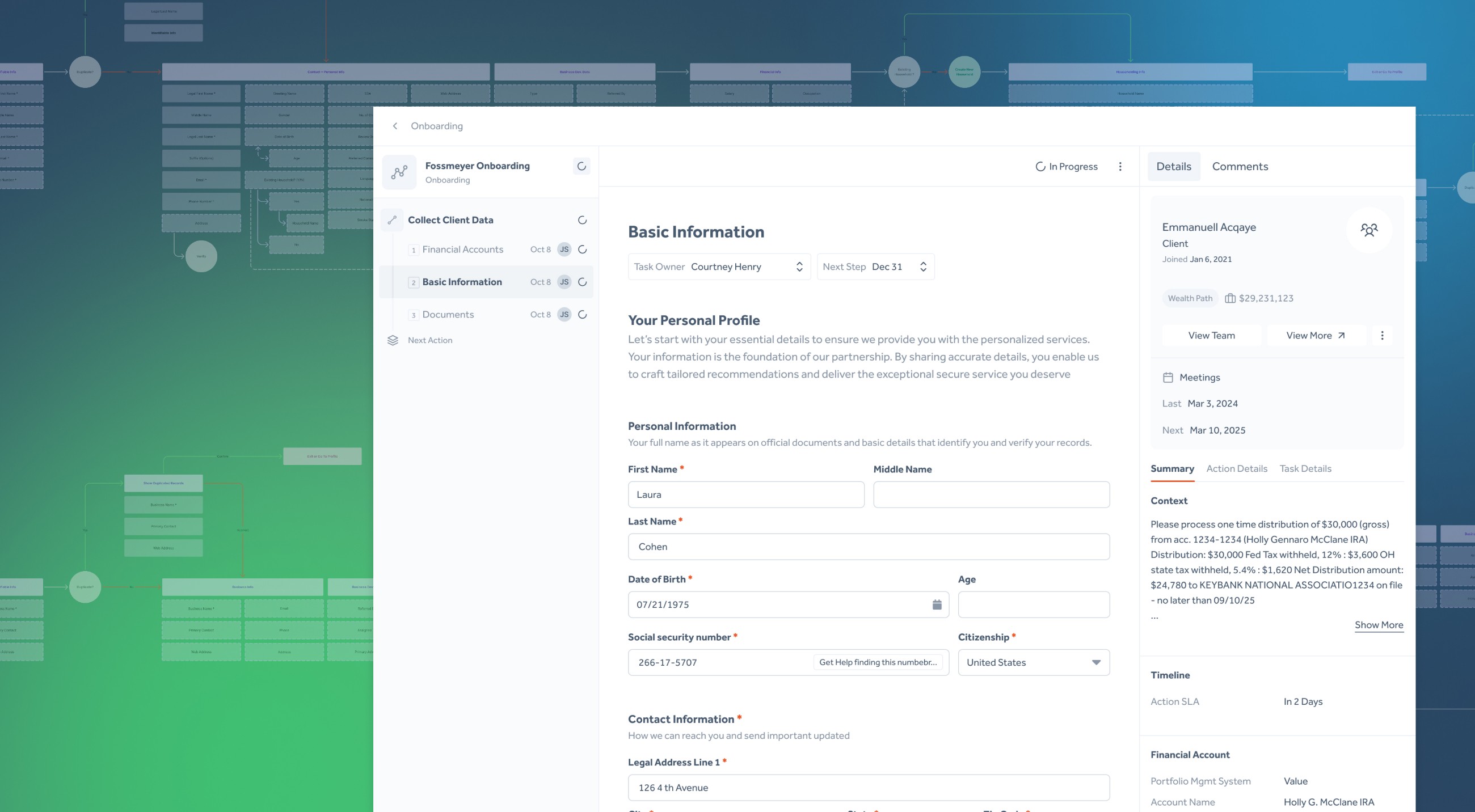
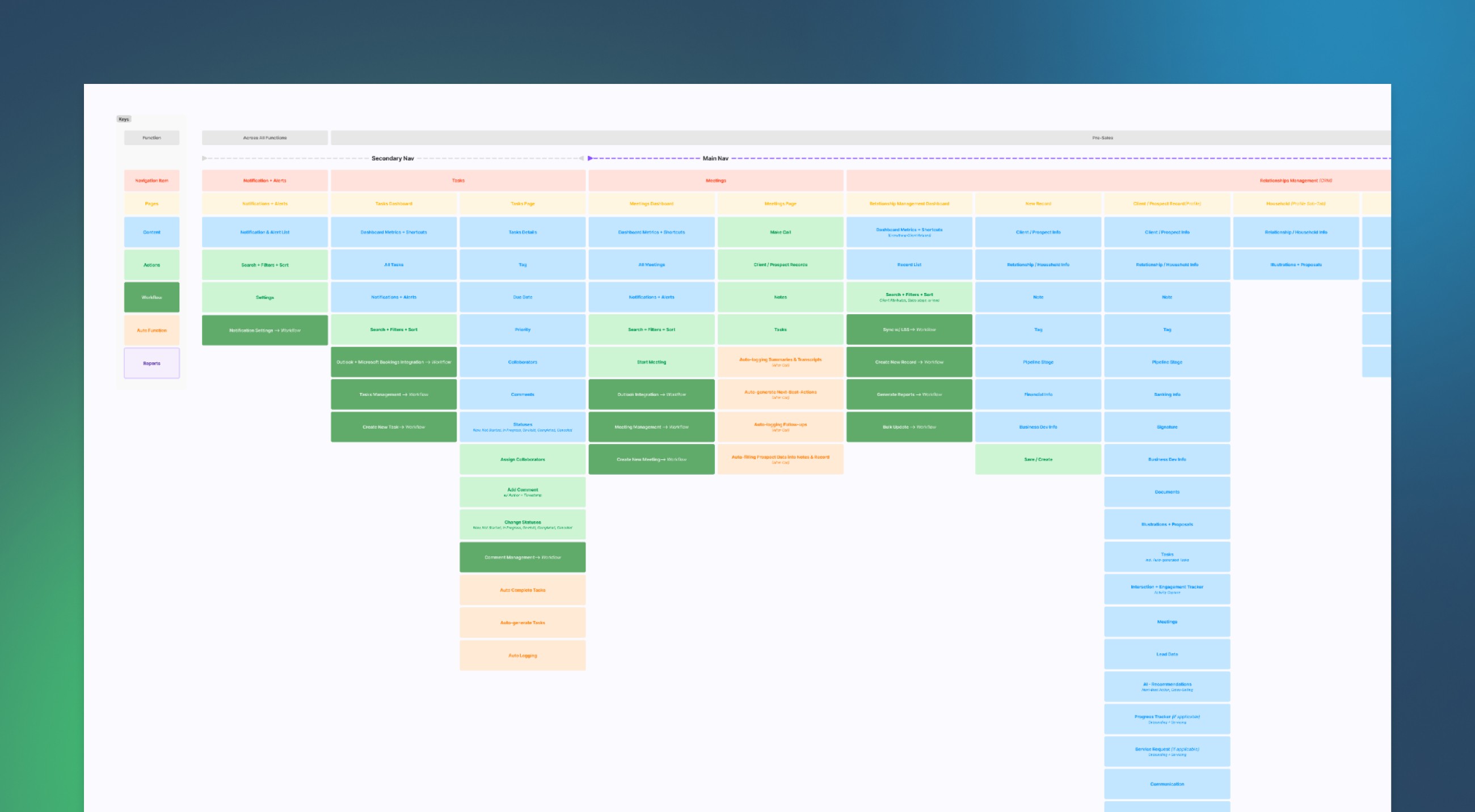
I designed the unified platform for Guardian's advisors, combining 8+ E2E workflows from 2 regulated domains (wealth management and insurance), consolidating 8 legacy tools, and enhancing overall experience with dual-fiduciary contract architecture, and three named systems (Household Graph, Agentic Workflow Engine, Bounded Exception Mechanism).
Enterprise Scale
Agentic UX
AI Trust
Probabilistic AI
Operator Contract
Summary
Guardian sells through independent contractors who also hold licenses to sell competitors' products, which makes every transaction a competitive choice for them.
Earn allegiance by serving the career
The brief was tool consolidation. The evidence said the commercial problem was allegiance.
Serving the advisor's career at the same structural depth as Guardian's revenue thesis meant building product mastery, portable licensing, and market literacy into the platform itself. Dual-fiduciary stopped being a values commitment and became a commercial precondition.
One rule, three systems
The contract took shape across three named systems.
→
The Household Graph asks before it asserts, surfacing AI-extracted data as a question on the advisor's profile rather than writing it silently into source of truth.
→
The Agentic Workflow Engine prepares but does not commit, running six or seven compliance and pre-fill tasks in parallel on advisor intent and handing the prepared work back for the advisor to commit.
→
The Bounded Exception Mechanism handles regulatory blocks symmetrically, explaining the block, surfacing compliant alternatives, and requiring a structured reason if the advisor overrides.
The contract protects the advisor from being acted upon unilaterally by the system, and protects Guardian from being exposed unilaterally by a probabilistic model.
The contract is the growth engine
The contract is what makes the revenue thesis scalable. Bounded exceptions filter at the workflow layer, so transaction volume can grow without forcing management overhead to grow with it. At national advisor conferences, independent contractors saw the prototype direction and volunteered on the spot for staged testing.
Built
→
Dual-Fiduciary Contract Architecture
→
Household Graph Interface Paradigm
→
Agentic Workflow Engine
→
Bounded Exception Mechanism
→
Unified Behavioral Instrumentation Loop
→
8+ End-to-End Workflows
Summary
Guardian sells through independent contractors who also hold licenses to sell competitors' products, which makes every transaction a competitive choice for them.
Earn allegiance by serving the career
The brief was tool consolidation. The evidence said the commercial problem was allegiance.
Serving the advisor's career at the same structural depth as Guardian's revenue thesis meant building product mastery, portable licensing, and market literacy into the platform itself. Dual-fiduciary stopped being a values commitment and became a commercial precondition.
One rule, three systems
The contract took shape across three named systems.
→
The Household Graph asks before it asserts, surfacing AI-extracted data as a question on the advisor's profile rather than writing it silently into source of truth.
→
The Agentic Workflow Engine prepares but does not commit, running six or seven compliance and pre-fill tasks in parallel on advisor intent and handing the prepared work back for the advisor to commit.
→
The Bounded Exception Mechanism handles regulatory blocks symmetrically, explaining the block, surfacing compliant alternatives, and requiring a structured reason if the advisor overrides.
The contract protects the advisor from being acted upon unilaterally by the system, and protects Guardian from being exposed unilaterally by a probabilistic model.
The contract is the growth engine
The contract is what makes the revenue thesis scalable. Bounded exceptions filter at the workflow layer, so transaction volume can grow without forcing management overhead to grow with it. At national advisor conferences, independent contractors saw the prototype direction and volunteered on the spot for staged testing.
Built
→
Dual-Fiduciary Contract Architecture
→
Household Graph Interface Paradigm
→
Agentic Workflow Engine
→
Bounded Exception Mechanism
→
Unified Behavioral Instrumentation Loop
→
8+ End-to-End Workflows